
Retaining Wall
Retaining walls are critical landscape elements used to stabilize slopes, create usable terraces, prevent erosion, and shape a property’s usable space. At Earth Art Landscape Excavation we design and construct retaining walls that combine structural integrity with aesthetic finish. Since 1999 we’ve constructed retaining walls for residential and light commercial clients across Durango, Colorado—handling everything from small garden walls to engineered systems with drainage and geogrid reinforcement.
Why Retaining Walls Matter
Uncontrolled slopes can cause soil movement, undermine foundations, and create unusable or unsafe outdoor areas. A properly designed retaining wall:
Stabilizes soils and prevents downhill erosion.
Creates level terraces and planting beds where slopes once limited use.
Protects structures and utilities from soil movement.
Integrates with drainage systems to manage subsurface water pressure.
Retaining wall failures usually stem from inadequate drainage, poor compaction, or undersized footings. Our approach ensures walls are designed with appropriate drainage, backfill, and reinforcement for long-term performance.
Key Benefits of Professional Retaining Wall Construction
Structural safety
Engineered design options for taller walls and load-bearing requirements.
Effective drainage
Weep systems, drain rock, and subdrains reduce hydrostatic pressure that leads to wall failure.
Durable materials
Selection of block, natural stone, timber, or poured concrete to match site and budget.
Enhanced property usability
Terracing and level areas maximize usable outdoor space.
Integration with landscape
Walls become aesthetic features with steps, planters, and lighting.
Types of Retaining Walls We Build
1.
Gravity Walls
Constructed with heavy materials like natural stone or block that resist tilt by mass. Best for lower-height applications where a broad base provides stability.
2.
Segmental Block Walls
Interlocking concrete block systems provide consistent geometry and are suitable for a range of heights. These systems often pair with geogrid reinforcement for higher walls.
3.
Mechanically Stabilized Earth (MSE) Walls
For higher walls or commercial applications, MSE designs use geogrid layers embedded in compacted backfill to create a reinforced soil mass.
4.
Poured Concrete Walls
Used for structural applications requiring monolithic strength, deep foundations, or unique shapes. We prepare subgrades and footings for concrete pours.
5.
Timber Retaining Walls
Timber can be used for lower walls or aesthetic features; proper treatment and drainage are essential for longevity.
Essential Components of a Well-Built Retaining Wall
Proper footing and compaction to prevent settlement.
Drainage layer (drain rock and a perforated drain pipe) to reduce water pressure.
Geotextile fabric to separate fine soils from drain rock and preserve porosity.
Backfill compaction in lifts to maintain stability and reduce settlement.
Finished drainage outlets to direct water away from structures.
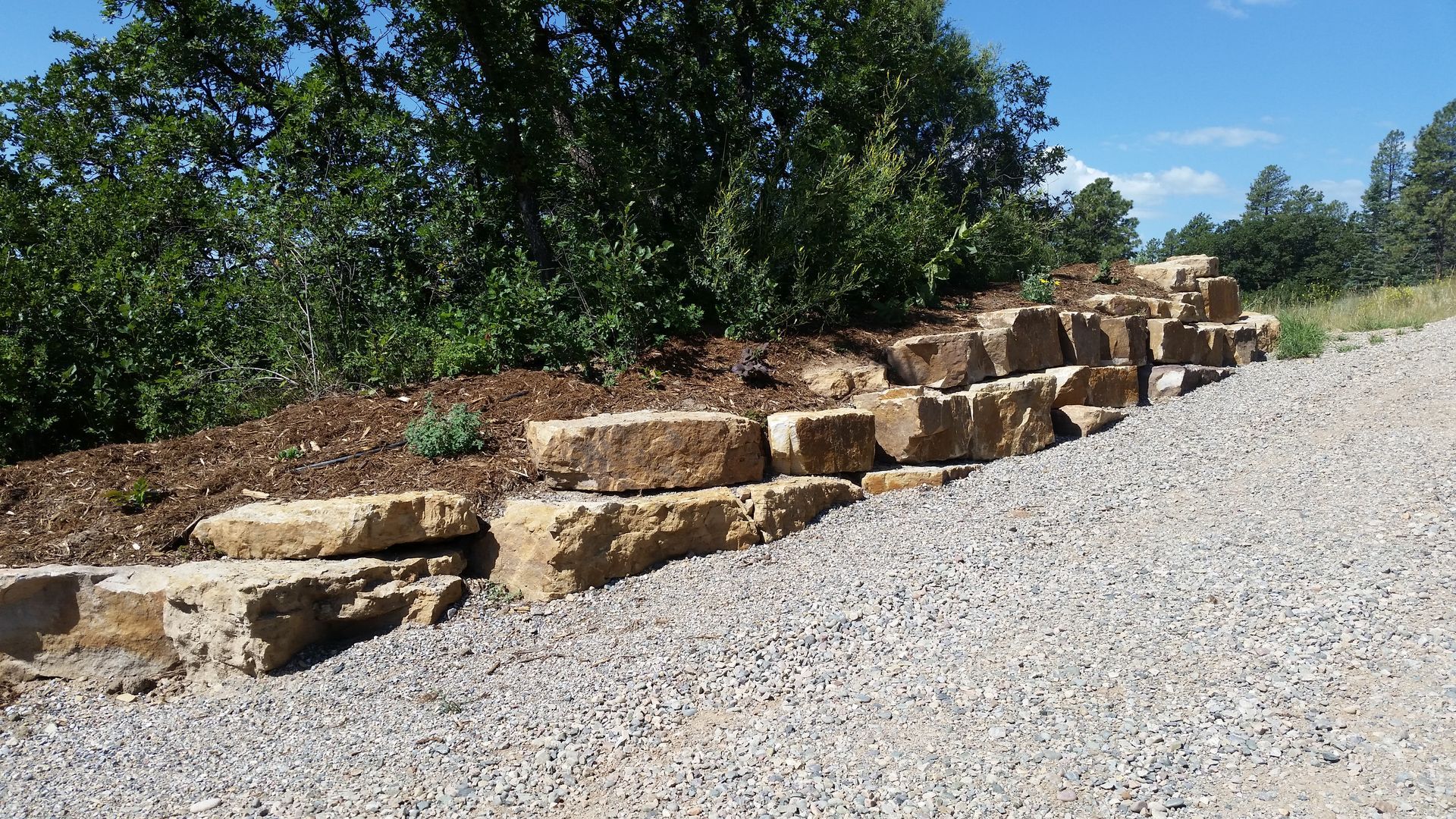
Why Drainage is Crucial
Hydrostatic pressure from trapped groundwater is the leading cause of retaining wall failure. Even a well-built wall will bow or fail if drainage is inadequate. Our standard practice includes:
Perforated drain pipes at the base of the wall routed to daylight or a storm system.
Clean drain rock and geotextile separation to prevent clogging.
Surface grading to keep runoff away from the wall face.
Why Drainage is Crucial
Creating level terraces for gardens or patios.
Building foundation support on sloped lots.
Defining driveway edges and preventing erosion.
Supporting raised planting beds and pathways.
Stabilizing slopes near roads or property lines.
Our Retaining Wall Process
Design options and engineering
For taller walls we coordinate engineered designs and geogrid specifications.
Excavation and footing preparation
Precise excavation to required depths and compaction to form a stable base.
Frequently Asked Question
How high can a retaining wall be before I need an engineer?
Requirements vary by jurisdiction and site conditions. Generally, walls over a certain height (often 3–4 feet) or those retaining critical structures require engineered designs. We coordinate with structural engineers when necessary.
Will a retaining wall increase my property taxes?
Typically not. Adding a retaining wall is considered an improvement in landscape and is not usually assessed separately, but local jurisdictions vary.
What materials are best for durability?
Concrete block and poured concrete offer excellent longevity. Natural stone is durable and attractive but can be more expensive. Proper drainage and construction matter more than material alone.
How long does it take to build a retaining wall?
Small walls can be completed in a few days; larger, engineered projects can take several weeks depending on site access, wall height, and weather.
Contact and Next Steps
If you’re dealing with a slope that limits your property’s usability or you need erosion control, contact Earth Art Landscape Excavation at (970) 946-2236 for a site assessment. We’ll evaluate the slope, recommend appropriate wall types, and provide a clear proposal and timeline.